28/01/20265 Mins read

SHARE THIS ARTICLE


On an ordinary Wednesday morning in July 2025, Allianz Life didn’t expect anything unusual. Their offices were running smoothly, advisors were talking to customers, and nothing looked wrong.
But the trouble had already started creeping in quietly, invisibly, through a door no one was watching.
A hacker didn’t break a firewall.
They didn’t exploit a complex vulnerability.
Instead, they called a vendor. A CRM provider. A trusted partner.
And through a simple social-engineering trick, they convinced someone to hand over access.
That one moment opened the gate.
By the time Allianz Life realized what had happened, data belonging to 1.4 million Americans was already exposed, names, addresses, dates of birth, and Social Security numbers.
They pulled the plug on the compromised accounts, called investigators, followed protocol, but the damage was done.
So…. This is where the story stops feeling like Allianz’s problem and becomes everyone’s problem.
This wasn’t a “technical issue.”
It was a human issue, and human issues don’t live inside firewalls.
If this were an isolated case, we could all shrug and move on, but it isn’t.
Threat groups like LAPSUS$ have made social-engineering attacks and vendors compromise their signature strategy.
The U.S. Cyber Safety Review Board spent months studying this group and what they found was unsettling:
In summary, they go for the people who have access, not the systems that protect it.
This is concerning because almost every company today relies heavily on vendors, tools, CRM platforms, cloud services, and contractors. Which means the real question isn’t: “Are my systems strong enough?”
It’s: “How many doors into my company exist and which ones am I not watching?”
I reached out to Oluwatobi, a cybersecurity engineer talent from ProDevs, and his response was painfully honest:
“There are two types of companies: the ones that have been hacked, and the ones that don’t know they have been hacked.
Bad actors are very smart, sometimes they even seem ten steps ahead.
Cybersecurity engineers are well equipped to handle malicious individuals on the net.
It’s quite unfortunate that cybersecurity is not just an afterthought in many organizations, but one that doesn't even cross their collective minds. Hopefully, the importance will be recognized and organizations do the needful.”
What I love about this perspective is that it’s not fear-mongering. It’s reality.
People assume the biggest danger is someone attacking their core infrastructure.
But in 2025, the biggest danger is someone tricking a person who has access to it.
If there’s anything the Allianz story teaches us, it’s this:
Cybersecurity today isn’t just about firewalls, cloud policies, and secure servers.
It’s about human behavior, vendor access, and the small gaps no one pays close attention to.
Cybersecurity engineers are not just “people who handle security.”
They are the ones who:
So when you think of having a cybersecurity engineer, don't think of it as something It is not “nice to have.” Neither is it just an “IT upgrade.”
It is protection for your company’s future.(if you actually want it to have a future)
“Why do I need a cybersecurity engineer?”
With everything happening in the world right now, especially with attacks like Allianz’s, that is no longer the right question.
Your real question should be:
“Can I afford not to have a cyber security engineer?”
Just one gap in your system can cost millions.
One mistake from a partner can expose your customers.
The huge risk of not having one can change your company’s reputation forever!
This is not to broadcast fear, but you do need to be prepared, and preparation today looks a lot like having the right security talent in place before things go wrong, not after.
The Allianz story is not about failure.
It is about a world that is changing faster than most organizations realize.
Attackers have evolved, their methods have evolved, the entry points have multiplied.
What protects you now is not just software, but people who know how to stay ahead.
So if you’re thinking about cybersecurity, think deeper, wider and long-term.
Because the threats are not slowing down and your responsibility to stay ahead shouldn’t either.
Choosing between full-time and freelance developers? Explore the pros, cons, and key factors to help your startup hire smarter and scale faster in 2025.
17/07/2025 | 3:59 AM
By Yetunde Hassan
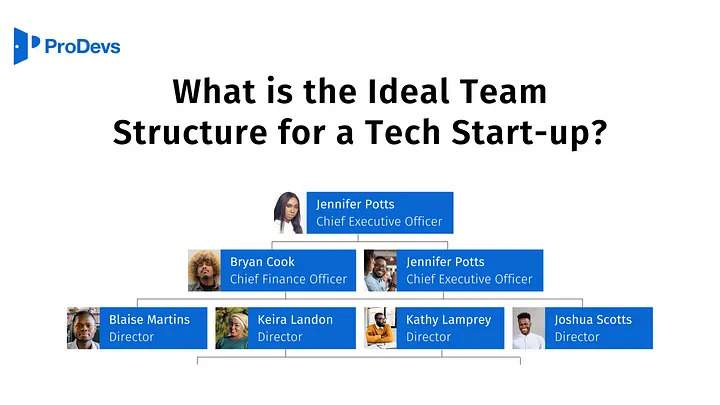
Putting together a suitable start-up team for a new and emerging start-up is crucial. Around 90% of start-ups fail, with 10% of them failing in the first year, according to Statista. The most common years for a business to fail are years two through five, with 70 percent of them falling into this group. Organization design is one of the critical sets of decisions that entrepreneurs frequently ignore and contribute to failure.
10/03/2023 | 4:27 AM
By Yetunde Hassan

Hire vetted and smart African talents today

651 N Broad St. Suite 206, Middletown, DE 19709, USA

89 Monaco Court, Brampton, ON L7A 1X2, Canada

2nd Floor, 10 Hughes Avenue, Alagomeji, Yaba, Lagos, Nigeria.


Backed by:

Copyright © 2026. ProDevs Outsourcing Inc.

